You are reading the documentation of OpenCTI 7.260811 LTS · 7.260811.0-lts.1, supported until 2027-09.Latest is 7.261119.0 →
Concepts
OpenCTI · Concepts: every page of this part of the documentation.
For
ConceptHow OpenCTI works: platform, workers, managers and connectorsWhat OpenCTI is made of, which parts keep state and which scale, and the path a piece of data takes from a connector to the knowledge base and the live stream.OpenCTI9 minConceptData modelHow OpenCTI represents what you know about a threat, as entities, observables and relationships that carry their own source and confidence, and where you find each type.OpenCTI8 minConceptNested objectsWhy the author, markings, labels and external references of an OpenCTI object are shared objects of their own, what that changes for your analysis, and how STIX bundles convert.OpenCTI6 minConceptContainersHow reports, groupings and cases keep what a source said together without owning the knowledge they hold, and what that changes when you add, share or delete.OpenCTI6 minConceptDeduplicationHow OpenCTI recognizes an object it already has, why two objects become one or stay apart, and how confidence decides what an incoming duplicate can change.OpenCTI12 min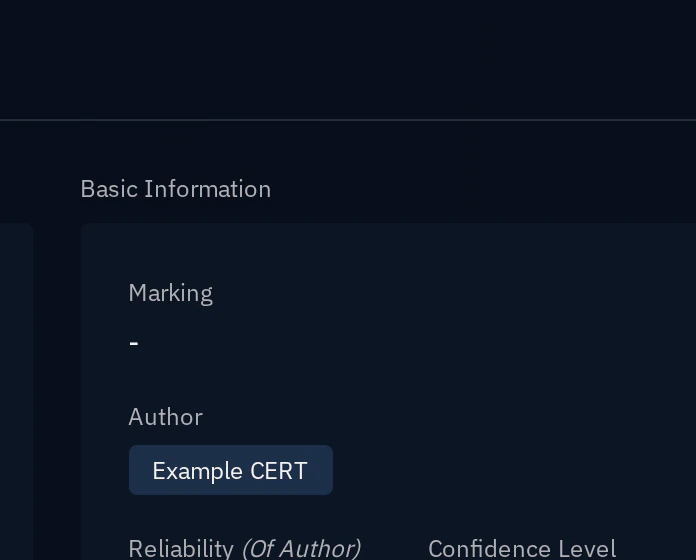
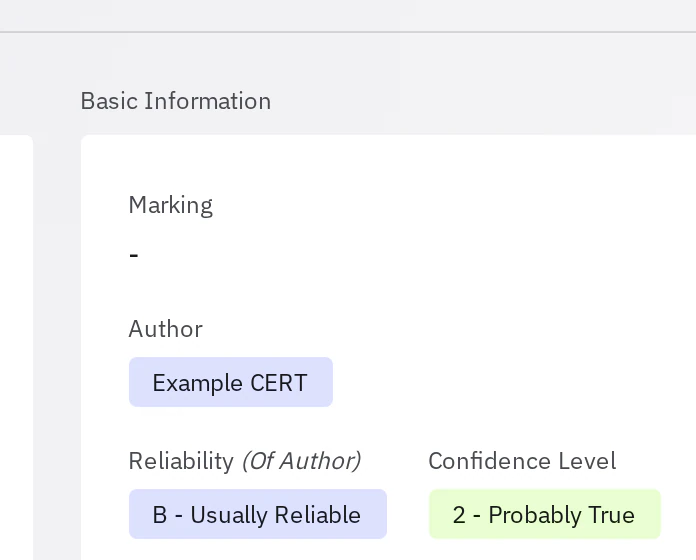 ConceptReliability and confidenceHow OpenCTI rates the reliability of sources and the confidence of information, and how max confidence levels decide who can create and change knowledge.OpenCTI8 minConceptMeaning of datesWhich date of an OpenCTI object answers which question, which dates come from the source and which from your platform, and how imports move them.OpenCTI7 minConceptData processingWhat OpenCTI does to each object on its way in, from the STIX bundle to the knowledge base, why it explains what analysts see, and what administrators set to control it.OpenCTI7 min